Schuhart Senior
Roadside PicnicSchuhart Senior is Redrick Schuhart’s father, a motionless moulage whose presence at the family table exposes the emotional cost of the uncanny condition in which he persists. He cannot answer a greeting or take part in a toast, but Redrick addresses him as his father and looks at him with unmistakable tenderness.
Identity and Appearance
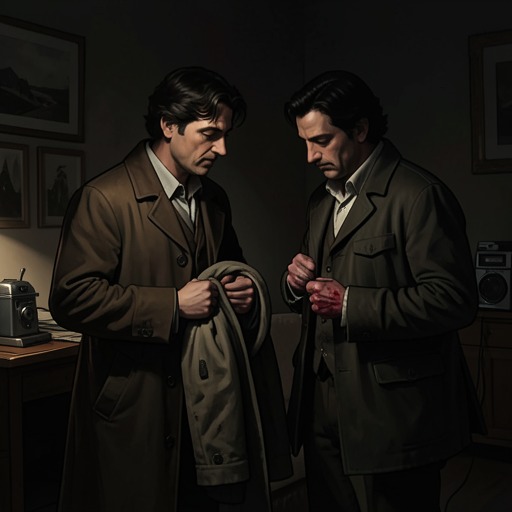
When Richard Noonan enters the living room, Schuhart Senior is already seated at the table. The old man is motionless and lists slightly; the lamplight falls across his broad figure. The brief, physical description makes his stillness the defining fact of his presence rather than a passing detail.
The narrative identifies him as a moulage: not simply an absent or remembered father, but an old man who remains bodily present while unable to respond. His silence places him between familiar domestic life and the uncanny. He occupies a chair at the table, yet cannot participate in what happens around him.
At the Family Table
Redrick enters the living room with a bottle and announces that they are going to celebrate, addressing Schuhart Senior as “pops.” He introduces Noonan to his father as their friend, turning the visitor’s arrival into a family occasion. The welcome is lively, but its recipient remains still.
Redrick sets out glasses, opens the bottle, and asks Noonan to pour just enough for his father to cover the bottom of a glass. Noonan moves the glass toward the old man, who continues staring at the wall without reacting. The small measure and the attempted gesture of inclusion give the toast the shape of an ordinary shared ritual, while Schuhart Senior’s inability to join it makes that normality painfully incomplete.
Redrick’s Attachment
Redrick tells Noonan that he has known him since childhood, then falls silent and looks at his father. A shudder crosses his face. Noonan sees in Redrick’s tough, freckled features a look of sincere love and tenderness, a striking contrast with the abrupt, boisterous manner in which he has entered the room.
The contrast makes Redrick’s care legible without requiring his father to speak or act. He pours a place for Schuhart Senior in the celebration, introduces him to a friend, and directs attention back to him even after the conversation turns elsewhere. The old man’s unresponsiveness does not erase the relationship; instead, it leaves Redrick’s gestures to carry its visible weight.